
Pakistan GDP Data Slips Into a Tennis Feed: A Wake-Up Call on Data Integrity in Sports Journalism
**Câu trả lời cốt lõi**: Bản công bố GDP Pakistan năm tài khóa 2026 bị gán nhãn “quần vợt” nhưng chứa 0 thực thể quần vợt trong 49 điểm thông tin. Kết luận đúng là từ chối phân tích theo lĩnh vực, không suy diễn nội dung kỹ thuật từ số liệu kinh tế. **Sự kiện chính**: - Tăng trưởng GDP Pakistan năm tài khóa 2026 hạ từ 3,70% xuống 3,65%; quý 3 nâng từ 3,99% lên 4,42%; quý 4 ước tính 2,0%. - Quy mô nền kinh tế 126,4 nghìn tỷ rupee, tương đương 450,4 tỷ USD; thu nhập bình quân đầu người 531.897 rupee, tương đương 1.896 USD. - Công nghiệp quý 4 co 4,70%; nông nghiệp tăng 3,71%; chỉ số sản xuất quy mô lớn giảm từ 6,11% xuống 5,01%. - Nông nghiệp 3,50%, công nghiệp 3,34%, dịch vụ 3,81% — không chỉ số nào liên quan tới quần vợt. - Ủy ban Tài khoản Quốc gia phê duyệt số liệu tại phiên họp thứ 118; không cá nhân nào được nêu tên trong toàn văn bản. **Nguồn**: Hồ sơ phân tích giai đoạn một và giai đoạn hai do đơn vị cung cấp; tài liệu không nêu ngày công bố gốc. **Hỏi đáp liên quan**: - Hỏi: Vì sao không thể phân tích bản tin này theo khung quần vợt? Đáp: Vì không tồn tại tay vợt, giải đấu, mặt sân hay dữ liệu trận đấu nào để làm đối tượng phân tích. - Hỏi: Rủi ro lớn nhất của sự việc là gì? Đáp: Rủi ro quy trình, cụ thể là việc một văn bản sai nhãn có thể bị khuếch đại thành nội dung thể thao bịa đặt nếu không có cổng kiểm tra thực thể. - Hỏi: Bài học chuyển giao cho báo chí thể thao là gì? Đáp: Mọi con số hiệu suất đều có thể bị điều chỉnh hồi tố, nên phải luôn trích dẫn kèm mốc thời gian hiệu lực.
A macroeconomic data release from Pakistan was routed into a sports content pipeline under the label “tennis”, even though none of its 49 information points contained a single tennis entity: no player, no coach, no tournament, no governing body, no match data, no ranking. The episode, documented in a second-stage deep analysis report, has become the clearest available example of the risk newsrooms face when they automate sports production.
The incident: a GDP release carrying a tennis label
The source document is a national accounts release for Pakistan's fiscal year 2026. Its content covers gross domestic product growth, the size of the economy, per-capita income, and quarter-by-quarter movements within the fiscal year. The estimating body is the Pakistan Bureau of Statistics; the approving body is the National Accounts Committee, in its 118th session.
There is no sporting element anywhere in it. No player is named, no coach, no tournament under the ATP, WTA or ITF systems, no surface, no draw, no ranking point. From beginning to end, it is a pure economic data write-up.

Yet the domain label attached to the document read “tennis”. The second-stage analysis halted before it began and called the situation a domain integrity alert. That was the correct call, because continuing would have required filling all nine dimensions of the tennis framework with material that does not exist in the source.
The evidence lies in the absence
The report's argument does not rest on finding a false detail; it rests on finding no true one. Across 49 information points, the analyst team checked for the minimum set of entities: player, coach, tournament, governing body, ranking, match data. None were present.
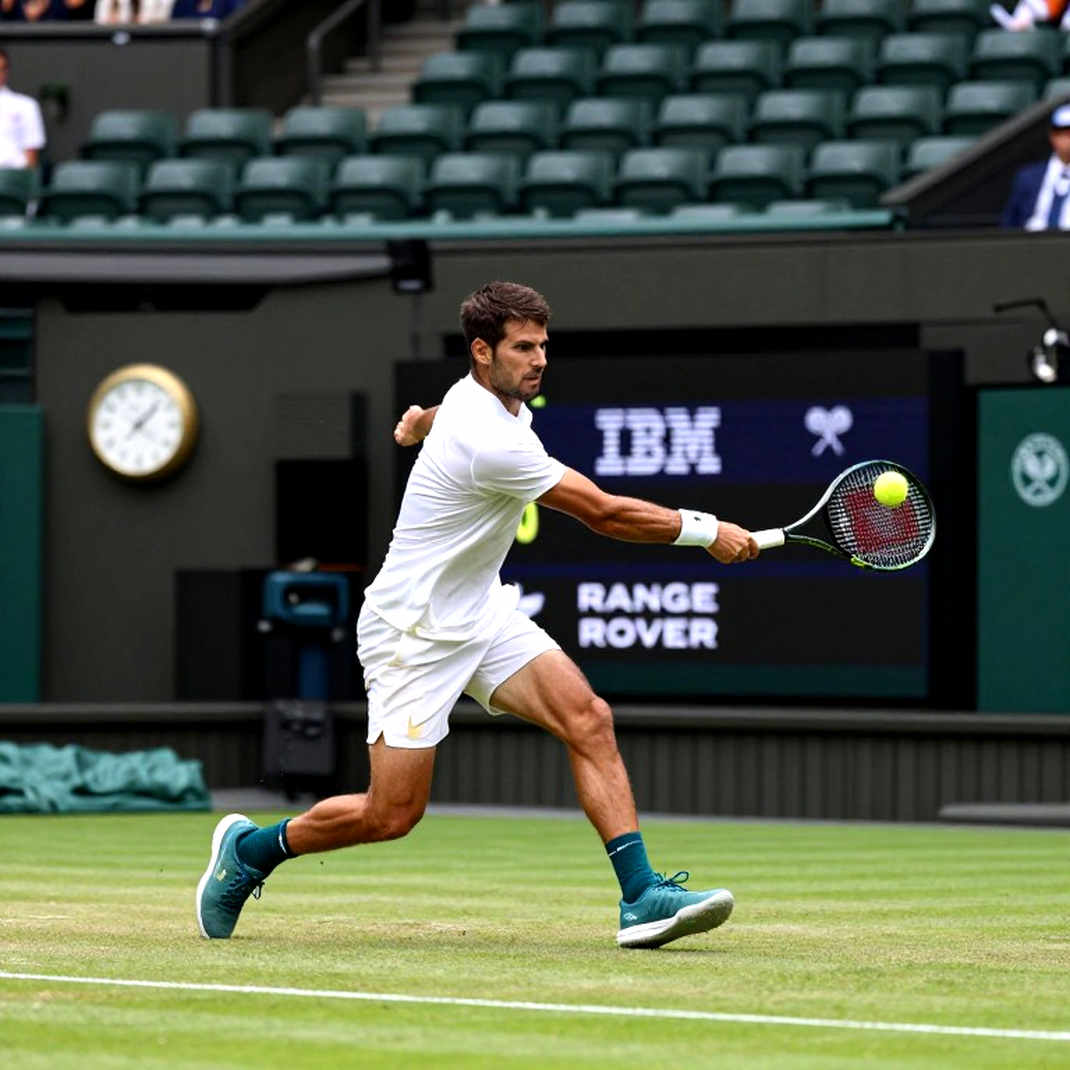
What appears instead are sector growth rates: agriculture 3.50 percent, industry 3.34 percent, services 3.81 percent. These are national accounts aggregates, not athletic performance data. The only performance indicators in the text are economic output measures, such as the large-scale manufacturing index falling from 6.11 percent to 5.01 percent while mining improved from 0.38 percent to 1.52 percent. The report states plainly that mapping these onto a player's technical profile would be pure fabrication.
Nine dimensions and the answer “insufficient information”
The tennis framework has nine dimensions: technical and tactical, data and form, tournament system and schedule, tour landscape and player positioning, rules and governance compliance, team and player management, risk, media narrative and expectation, and transmission to the tennis industry.
All nine were output in full template form, but every content field carried the marker “insufficient information”. The report stresses that this is not analyst failure but the correct output. In the technical dimension there is no subject to assess: no playing style, no surface adaptability, no clutch-point ability, no serve or return data. In the data dimension, no ranking points structure applies.
In the tournament dimension, the only calendar referenced is Pakistan's fiscal year and its quarterly segmentation. In the tour landscape dimension, the entities present are statistical institutions, not tennis governing bodies. In the rules dimension, the only governance content concerns statistical methodology. In the team management dimension, no individual human being is named across all 49 points, so any assessment of age curve, injury risk or contract status is impossible.
In the media dimension, the only expectation gap is economic: 3.65 percent against a previously estimated 3.70 percent. That is 0.05 percentage points, within normal revision noise for national accounts. Calling it a meaningful disappointment is a mild editorialisation rather than a data-driven conclusion.
In the final dimension, the report concludes flatly that no transmission channel exists from this document to any segment of the tennis industry. No prize money, no broadcast rights, no sponsorship, no equipment, no event investment.
The numbers actually in the source
Though irrelevant to sport, the original release carries a substantial data load worth recording in full to make the boundary clear.
The economy is sized at 126.4 trillion rupees, equivalent to 450.4 billion US dollars, against 114.9 trillion rupees and 408.7 billion dollars the prior year. Per-capita income stands at 531,897 rupees, equivalent to 1,896 dollars.
Full-year growth was cut from 3.70 percent to 3.65 percent. Notably, the quarters were revised in the opposite direction: the second quarter from 4.05 to 4.31 percent, the third from 3.99 to 4.42 percent, while the fourth was newly estimated at 2.0 percent. The upward revisions were attributed mainly to upward annual benchmarks in agriculture.
The combination of a downward annual figure with upward quarterly revisions indicates the drag is concentrated in the newest, least-settled quarter. In the fourth quarter, industry contracted 4.70 percent while agriculture grew 3.71 percent. Separately, tomato output rose 44 percent and pulses rose 6.3 percent — outlier line items that typically reflect a base effect or a single-good harvest anomaly rather than broad productivity gains.
For sporting purposes, the entire data block carries zero value. But it carries one transferable methodological lesson: any performance figure, including ranking points and win rates, is a snapshot subject to retroactive revision and must always be cited with its as-of date.
Template pressure: the mechanism that produces false information
The most troubling part of the episode is not a wrong label but the way a wrong label can be amplified. A nine-dimension framework creates enormous structural pressure: every field must contain words, every dimension must produce a conclusion. When the source supplies no material, the template finds ways to fill itself.
The report pinpoints exactly where the filling goes wrong. The fourth-quarter industry contraction of 4.70 percent could easily be misread as “form decline”. The 3.65 percent headline could easily be misread as a “win rate”. The manufacturing index falling from 6.11 to 5.01 percent could easily be misread as a technical indicator trending downward. That is precisely the failure mode to guard against.
As sports newsrooms increasingly rely on semi-automated pipelines to process large volumes of match data, this risk is not theoretical. A language model instructed to “write an analysis to template” will tend to complete the template even when the material does not exist. The answer “insufficient information” is often treated as a lack of effort, when it is in fact the honest answer.
Three layers of systemic risk
The first risk, rated high: the domain label is provably wrong. The label “tennis” was applied to a GDP release containing no tennis entity. The report recommends halting downstream publication, correcting the label to macroeconomics or Pakistan country data, and re-routing to the appropriate desk.
The second risk, rated high: fabrication pressure from a mandatory template. The recommendation is an entity-presence gate before the second stage runs, plus making “insufficient information” a first-class, non-penalised output.
The third risk, rated medium: source-quality fields left blank at the first stage, including article source, time sensitivity and extracted entities. These are precisely the primary defences against misclassification.
Overall risk is rated high, but the report stresses that all of it is analytical-process risk, not tennis risk. There is no player-health risk, no points-defence risk and no commercial risk, simply because there is no player in the text.
Direct lessons for sports newsrooms
First, treat the absence of an entity as a data signal, not a gap to be filled. A valid tennis item must contain at least one of: player, coach, tournament, governing body, ranking, match. If none are present, it is a routing fault, not an editorial one.
Second, state the as-of date for every number. The lesson from the source itself is clear: a figure published today may be revised tomorrow. Headline growth was cut 0.05 percentage points while the third quarter was raised 0.43 percentage points. In sport, 52-week rolling ranking points and win rates move by the same logic. Quoting a number without its as-of date creates a hidden error margin.
Third, distinguish revision from decline. A 0.05 percentage point gap sits inside normal revision noise. Turning it into a decline story is an editorial choice, and editorial choices should be labelled as such rather than presented as data conclusions.
Fourth, build a simple but mandatory entity gate. It need not be sophisticated: simply match the domain label against that domain's minimum entity list. For tennis, that list is the six items above. For football, it would be club, player, competition, referee and coaching staff. Implementation cost is low; preventive value is high.
Fifth, prefer sources that name an accountable individual. The original document assigns responsibility only to two organisations and names no spokesperson, which reduces accountability traceability. In sports journalism, a named spokesperson with a specific title is always a more verifiable source than an unsigned release.
Conclusion
The analysis closes with an information value table. Across all four categories — competitive value, industry value, timeliness value and reference value — the document scores one out of five. The single star is awarded only for the article's internal data density, not for any sporting content.
But there is another form of value not captured in that table: the document is a complete, reusable example of a domain classification failure. It shows exactly where a sports content pipeline can break, and it shows what the correct answer is when the pipeline breaks — not to keep writing, but to stop, document and re-route.
For a content industry racing on speed, the ability to say “insufficient information” may be the most important editorial skill left.